
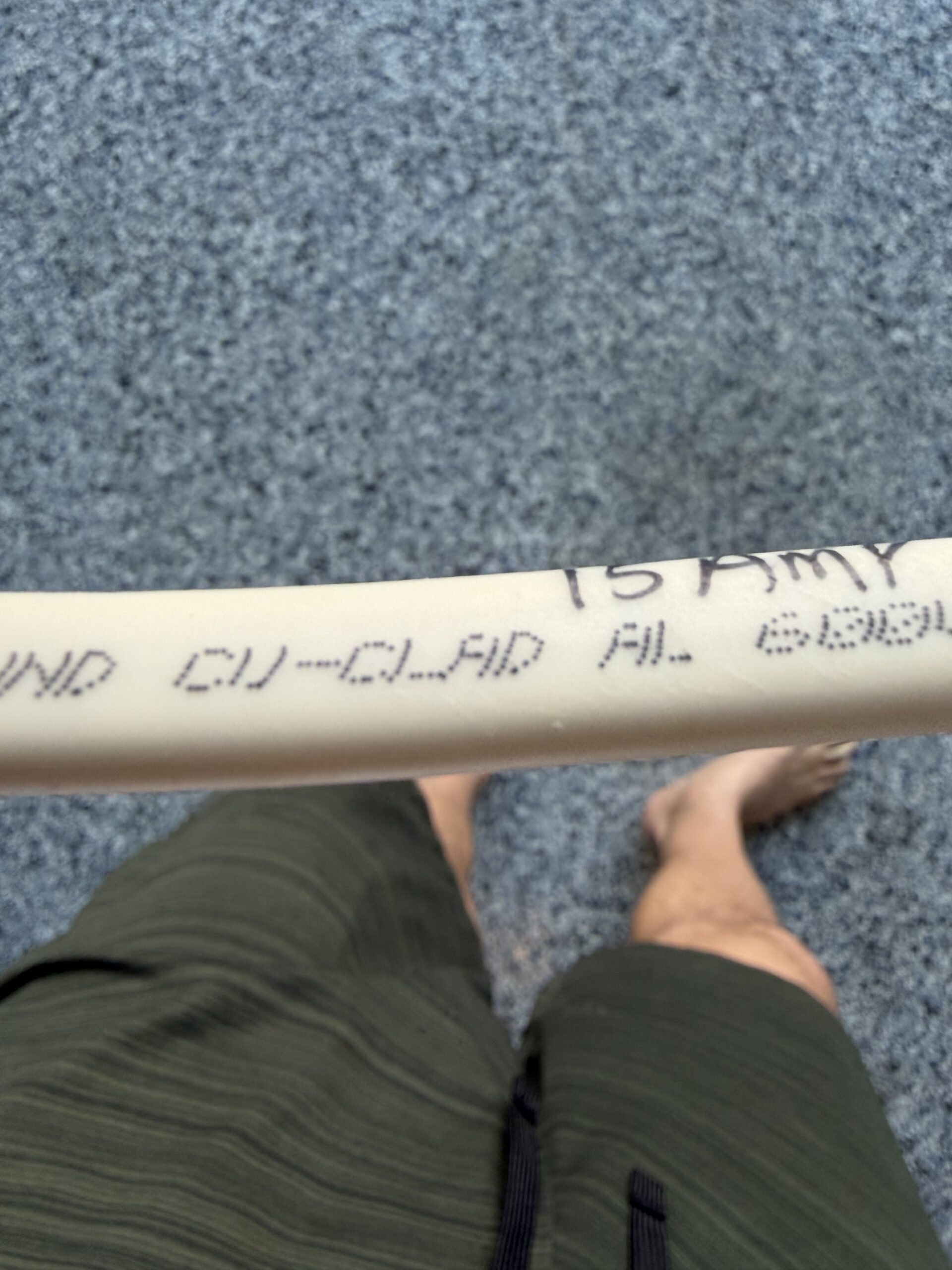
If you’ve recently had a new home built in Florida or you’re reviewing a four-point inspection report on a newer property, you might have spotted something called copper-clad aluminum (CCA) wiring. BIG Builders across the country are making the switch in new construction, and it’s showing up more and more in modern homes here in Port St. Lucie, Vero Beach, and beyond.
Here’s the reality: copper-clad aluminum wiring isn’t the scary old solid aluminum wiring from the 1960s and 70s. But it’s also not the same as solid copper. With copper prices experiencing a dramatic surge (a reported 54% rise in recent years being a major driver), builders are turning to CCA to keep costs down while still delivering a code-compliant electrical system that looks and performs close to traditional copper.
What Exactly Is Copper-Clad Aluminum Wiring?
CCA wire has an aluminum core covered by a thin layer of copper. The copper cladding gives it the familiar reddish-copper appearance on the outside and improves conductivity at connection points compared to bare aluminum. It’s been around since the 1970s as a cost-effective alternative during past copper shortages, but it’s now seeing widespread adoption in residential new builds because of today’s sky-high copper prices.
How to spot CCA fast (without guessing)
- Read the cable/insulation printing. Look for “CU-CLAD AL” / “Copper Clad AL” markings.
- Look at a cleanly stripped end (done correctly): copper outside, silvery core inside is a clue.
- Document it on the 4-Point (because insurers are explicitly tracking it).


Three Key Facts About Copper-Clad Aluminum Wiring
- It’s Fully Code-Approved and UL-Listed — CCA building wire meets National Electrical Code (NEC) requirements and is recognized as a safe, listed wiring method when installed correctly. It has decades of real-world use with no widespread remediation history like older solid aluminum wiring.
- It Requires Upsizing — Because aluminum conducts electricity differently than copper, CCA wire must usually be installed two AWG sizes larger than solid copper to carry the same amperage. That means more conductor in the walls and potentially deeper electrical boxes to handle the extra volume.
- It Looks Like Copper But Behaves Differently — The outer copper cladding makes it easy to mistake for solid copper at first glance. This is exactly where problems can start if installers or future homeowners treat it exactly like pure copper.
Why Insurance Companies Care — And Why You Should Too
Most four-point inspection reports in Florida now specifically identify wiring type, and many inspectors are noting copper-clad aluminum separately. If your insurance carrier asks about it on the application or four-point form, there’s a reason: they want to understand the exact material in your home’s branch circuits.
While properly installed CCA is considered safe, any aluminum-core wiring raises flags because of the potential for long-term issues if it wasn’t handled perfectly during construction.
Potential Issues Homeowners Should Know About
Because CCA looks so much like solid copper, it’s frequently overlooked or misidentified as pure copper. That can lead to:
- Over-fusing — An inspector or electrician who thinks it’s #12 copper might allow a 20-amp breaker when the actual CCA conductor should be protected at a 15-amp rating. Over time, this can overheat the wire.
- Damage During Stripping or Installation — If the copper cladding is nicked, scraped, or stripped too aggressively, the aluminum core is exposed. Once exposed aluminum meets a copper terminal, screw, or device without the proper antioxidant or rated connector, you can get dissimilar metal reaction (galvanic corrosion). This creates higher resistance, heat buildup, and in a worst-case scenario, an overheating event that could lead to arcing or fire.
- Incompatible Devices — Standard copper-only outlets, switches, or light fixtures may not be rated for the aluminum core. For 30A and above devices, the guidance highlights that terminals are generally for copper unless marked AL/CU, which then allows aluminum, copper, and copper-clad aluminum.
- Using the wrong pressure plates, backstabs, or connectors can loosen over time as the aluminum expands and contracts differently than copper.
- For splices and wire connectors, UL warns not to assume “CU-only” is okay for CCA—use properly identified connectors.
- If you’re dealing with a manufactured home, don’t assume the same rules apply. Federal manufactured home standards state that aluminum core conductors such as copper-clad aluminum are not acceptable for branch circuit wiring in manufactured homes.
These issues are avoidable with education, proper installation techniques (using CCA-rated or CO/ALR devices, torqueing screws correctly, and never backstabbing), but they’re exactly why knowing what you’re looking at on a four-point report matters.
Bottom Line for Florida Homeowners
Newer homes with copper-clad aluminum wiring are not automatically a red flag — when they are wired perfectly. But because this material is still relatively new in widespread residential use, education is your best protection.
When you see “CCA,” “Copper Clad Aluminum,” or a note about aluminum branch wiring on your four-point inspection report, don’t just shrug it off. Ask questions. Make sure the installing electrician used the correct terminations and that the inspector verified proper sizing and connections.
At the end of the day, whether your home has solid copper, CCA, or anything in between, the goal is the same: a safe, reliable electrical system that your insurance company will stand behind. Knowledge is the best way to protect your biggest investment.
Have questions about the wiring in your home or need a professional four-point inspection that actually explains what you’re looking at? Drop a comment below or reach out — happy to help keep your Florida home safe and insurable.
Stay informed, stay protected!
— Toby
